
04 JUNE 2026 · BUYING GUIDE
Reverse Cycle vs Evaporative Cooling in Adelaide
Understand the difference between reverse-cycle and evaporative cooling for Adelaide homes, including comfort, humidity, heating, running costs and suitability.
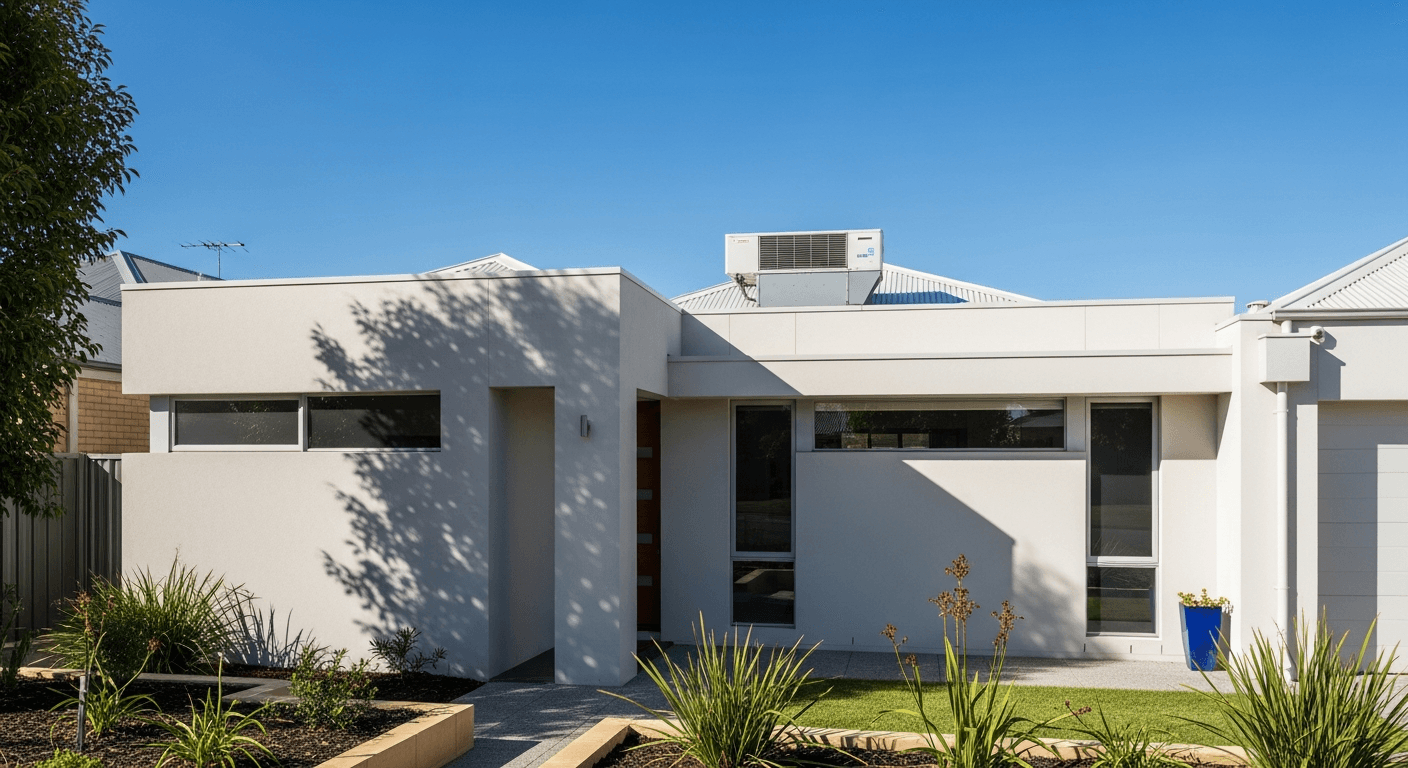
Reverse-cycle and evaporative cooling are both common in Adelaide, but they feel very different and suit different homes. Reverse-cycle air conditioning gives refrigerated cooling and heating from one system. Evaporative cooling uses fresh outside air passed through wet pads, then pushes that cooled air through the home.
Adelaide's dry heat can make evaporative cooling attractive in the right conditions, but reverse-cycle is more controlled, works across more weather conditions and provides heating as well as cooling.
How reverse-cycle air conditioning works
Reverse-cycle air conditioning moves heat rather than creating it. In summer, it removes heat from inside the home and rejects it outside. In winter, it reverses the process to bring heat into the home.
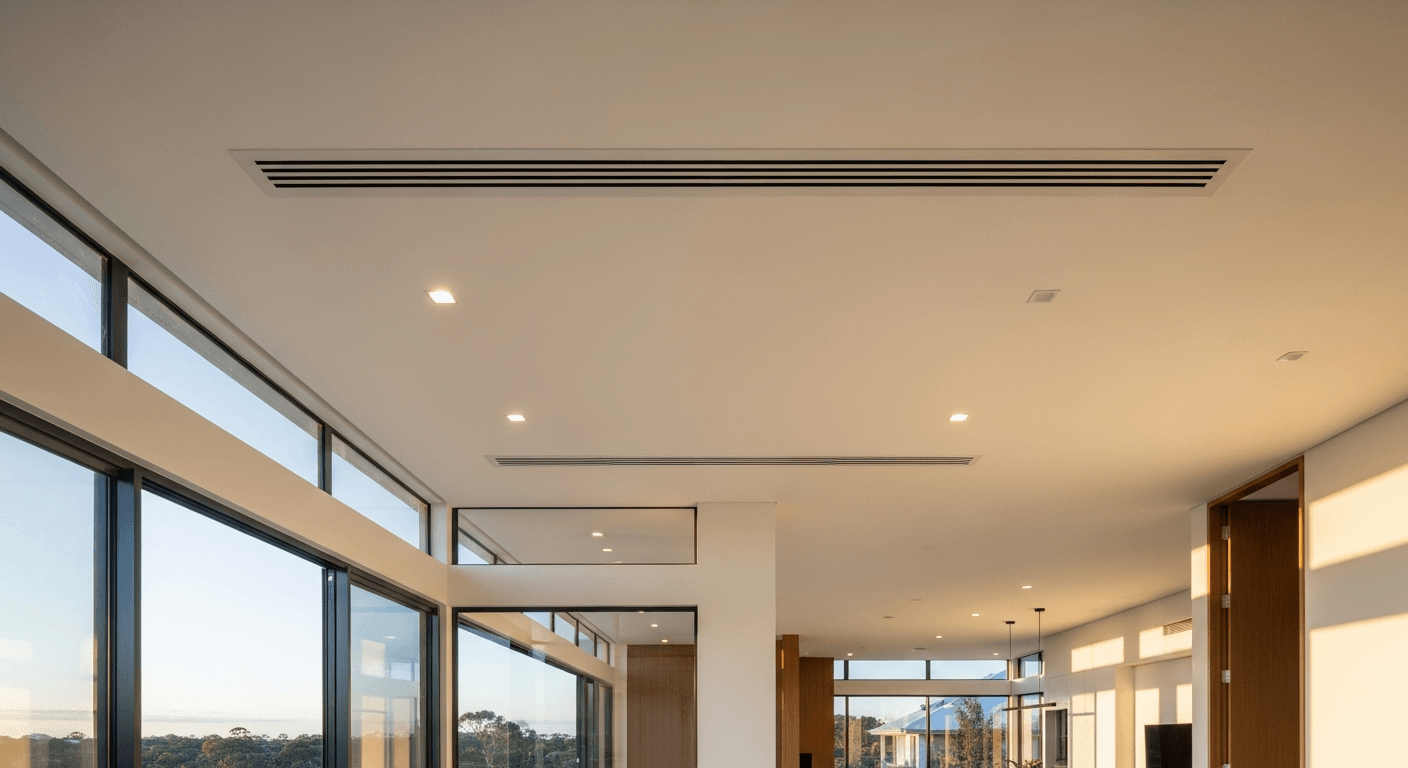
That makes it a year-round system: cooling, heating, filtration, zoning options and precise temperature control. See our ducted reverse cycle air conditioning page for the premium ducted option.
How evaporative cooling works
Evaporative cooling draws outside air through water-saturated pads. The air cools as water evaporates, then the system pushes fresh air through the home. Windows or doors need to be open so air can escape.
It can feel natural and fresh on hot, dry Adelaide days. It can also use less electricity than refrigerated cooling in suitable conditions. But performance drops when humidity rises, and it does not provide refrigerated heating.
Reverse-cycle advantages
- Heating and cooling:: One system can handle Adelaide summers and winters.
- Precise control:: Set a target temperature and the system works to hold it.
- Works in humid conditions:: Refrigerated cooling does not rely on dry outside air.
- Zoning options:: Ducted reverse-cycle systems can condition selected areas.
- Closed-home comfort:: You do not need open windows for the system to work.
Evaporative cooling advantages
- Fresh airflow:: It continually brings outside air through the home.
- Lower cooling energy use in dry conditions:: It can be efficient on hot, dry days.
- Whole-home airflow:: Ducted evaporative systems can move large volumes of air.
- Natural feel:: Some homeowners prefer the open-window fresh-air style.
The limitations to consider
Evaporative cooling depends heavily on outside conditions. On humid days, it may not cool the way homeowners expect. It also requires ventilation, so the home is not sealed the same way it is with reverse-cycle air conditioning.
Reverse-cycle systems usually cost more upfront and need a well-designed installation to avoid poor airflow or high running costs. The trade-off is stronger comfort control and year-round heating and cooling.
Which is better for Adelaide homes?
For many Adelaide homes, reverse-cycle is the more complete comfort solution because it handles both hot and cold weather. Evaporative cooling can still be a good option for the right home, especially where the owner wants fresh airflow and lower-cost cooling in dry conditions.
The best choice depends on your expectations. If you want set-and-forget temperature control, reverse-cycle usually wins. If you like open windows and fresh air movement, evaporative may still suit.
Get the system matched to your home
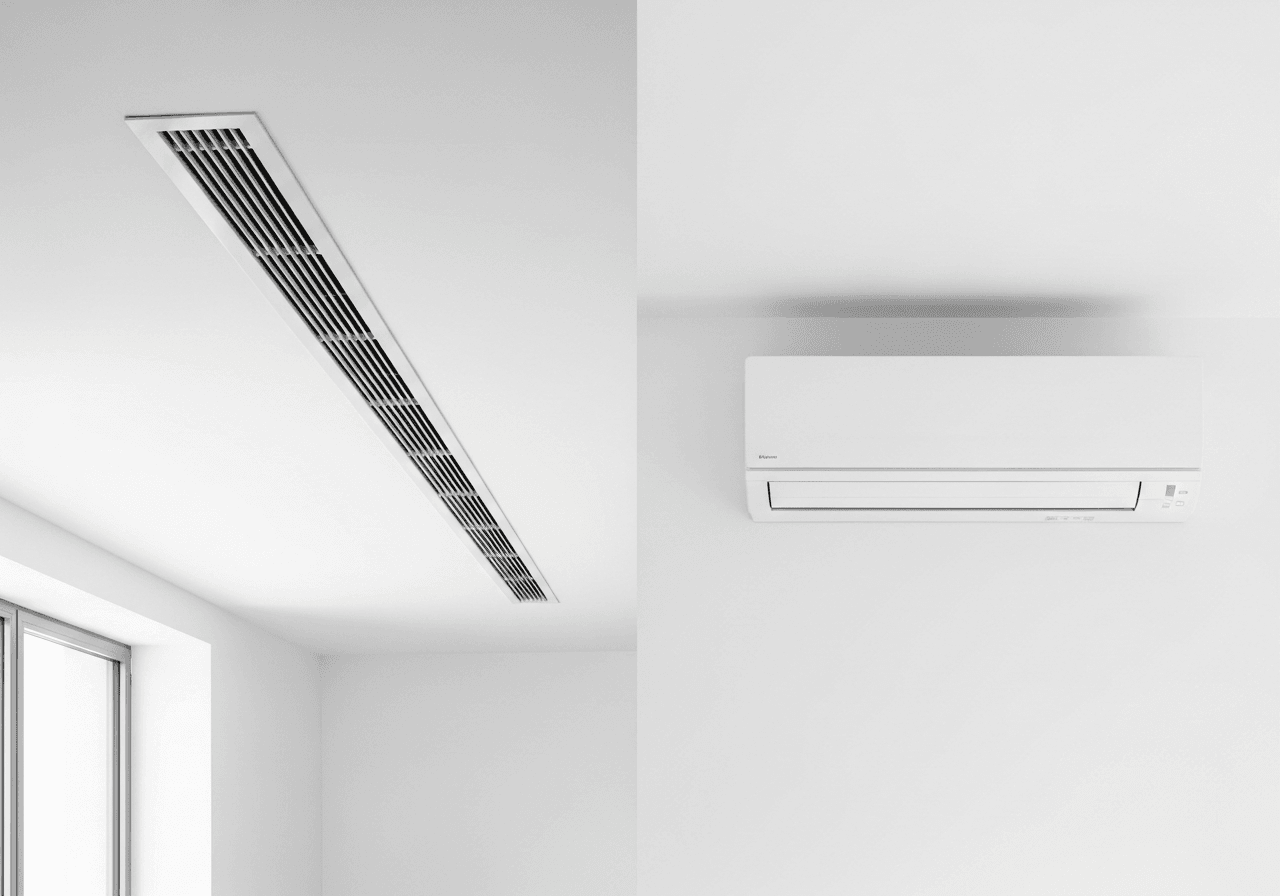
AFA Air can help compare ducted reverse cycle, ducted evaporative and wall split systems for your home. Book a free quote and we will recommend the system that fits the property, not just the brochure.
Need air-con help?
Contact AFA Air for expert advice, servicing, or a free quote.